Hubbard's creeks — not the big reservoirs — flood its basements. Integrity Water Damage Restoration Ohio provides 24/7 emergency water extraction and drying in Hubbard. Call (614) 956-3233.
Water Emergency Right Now?
Do these five things first — then let us take it from there.
- Stay safe first. Don't walk through standing water if the power may be on — and never touch submerged outlets, panels, or appliances.
- Stop the source if you can. Shut the main water valve for a burst pipe or appliance leak. For storm flooding, focus on safety, not the water.
- Call (614) 956-3233 now. Our dispatchers answer 24/7 and can talk you through the next steps while a crew rolls.
- Move what matters. Lift rugs, electronics, and furniture legs out of the water if it's safe to do so — every inch helps.
- Don't wait on drying. Mold can start within 24–48 hours. Fast professional drying is the difference between a cleanup and a rebuild.
01When the Reservoirs Can't Help You: Hubbard's Small-Creek Flood Problem
Here's the paradox of flood protection in Hubbard, Ohio: some of the best flood-control infrastructure in the Mahoning Valley sits upstream — the U.S. Army Corps of Engineers reservoirs at Berlin and Mosquito Creek — and it does almost nothing for Hubbard's worst floods. Those reservoirs regulate the Mahoning River. They do not regulate Little Yankee Creek and Mud Run, the two small streams that run through this easternmost Trumbull County city on the Pennsylvania line — and those two creeks are Hubbard's documented floodwater corridors, named in the USGS "Floods of August and September 2004" report (OFR 2008-1291) among the Trumbull County streams affected by flooding.
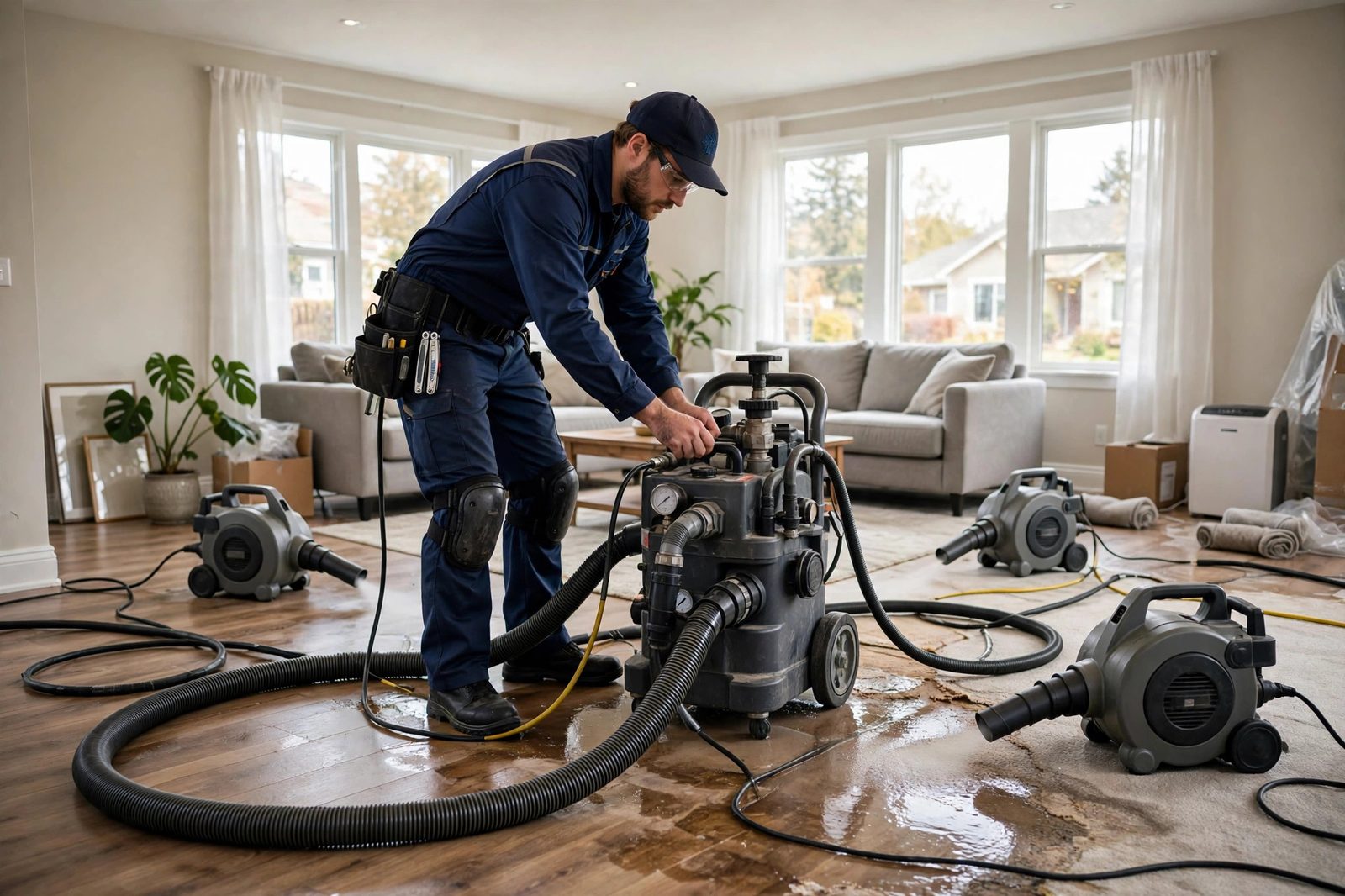
That distinction is the single most important thing a Hubbard homeowner can understand: the big dams protect the big river. Your basement floods from the small creek behind the subdivision, the run that flashes in an hour, the storm sewer that surcharges when a Pennsylvania-born storm cell stalls over the border. Integrity Water Damage Restoration Ohio provides 24/7 emergency water damage restoration across Hubbard — extraction, drying, sewage cleanup, mold prevention. Call (614) 956-3233.
02Little Yankee Creek and Mud Run: Two Named Flood Corridors
The USGS doesn't name streams casually. Its 2004 eastern-Ohio flood study specifically lists Little Yankee Creek at Hubbard and Mud Run at Hubbard — putting this small city on the federal flood record. Little Yankee Creek drains east toward the Shenango River basin, which means Hubbard sits in the Mahoning/Beaver/Ohio River drainage with a border-town twist: backwater and tributary dynamics from the Shenango system can push water into low-lying areas near the Pennsylvania line from the east, even while the Mahoning side looks calm.

Small watersheds are flash watersheds. A few inches of rain over a few square miles — the kind of storm that barely registers on the regional news — can put Little Yankee Creek or Mud Run out of their banks in an hour. Homes near these corridors, and homes at the low end of subdivision grading, are the ones that take water first.
03September 2004: The Flood on the Federal Record
The benchmark event for modern Hubbard is September 8–11, 2004, when flooding struck Little Yankee Creek and Mud Run at Hubbard — the event that put the city in the USGS flood report and in FEMA Disaster 1556. Eastern Ohio took a beating that September, and Hubbard's small creeks did exactly what small creeks do: rose fast, spread into low ground, and receded before most of the region noticed.

The basin-scale context runs deeper. In January 1959, the Mahoning basin saw its worst flooding since the Berlin and Mosquito reservoirs were built — 7,000+ workers laid off basin-wide, Crab Creek flooding parts of Youngstown (USGS, "Floods of 1959"). That was a river-basin event. The 2004 Hubbard flooding was a tributary event. Both damage basements; only one is on most homeowners' radar.
04April 2025: The Reservoirs Worked — and Proved the Point
On April 27, 2025, Mosquito Creek Lake hit 902.55 feet — the 4th-highest pool on record — during a Trumbull County flash-storm event. The reservoir did its job: it held the water back and spared downstream communities, part of a system that has prevented $915+ million in flood damages since 1944 (USACE Pittsburgh District, via DVIDS). That's a genuine success story — and it proves the thesis of this page. The reservoirs caught the Mahoning-basin runoff. The flash flooding that same storm dropped on small tributaries and storm sewers around Hubbard still had to go somewhere, and "somewhere" is basements, low streets, and overwhelmed culverts. Big dams, small creeks, different floods.
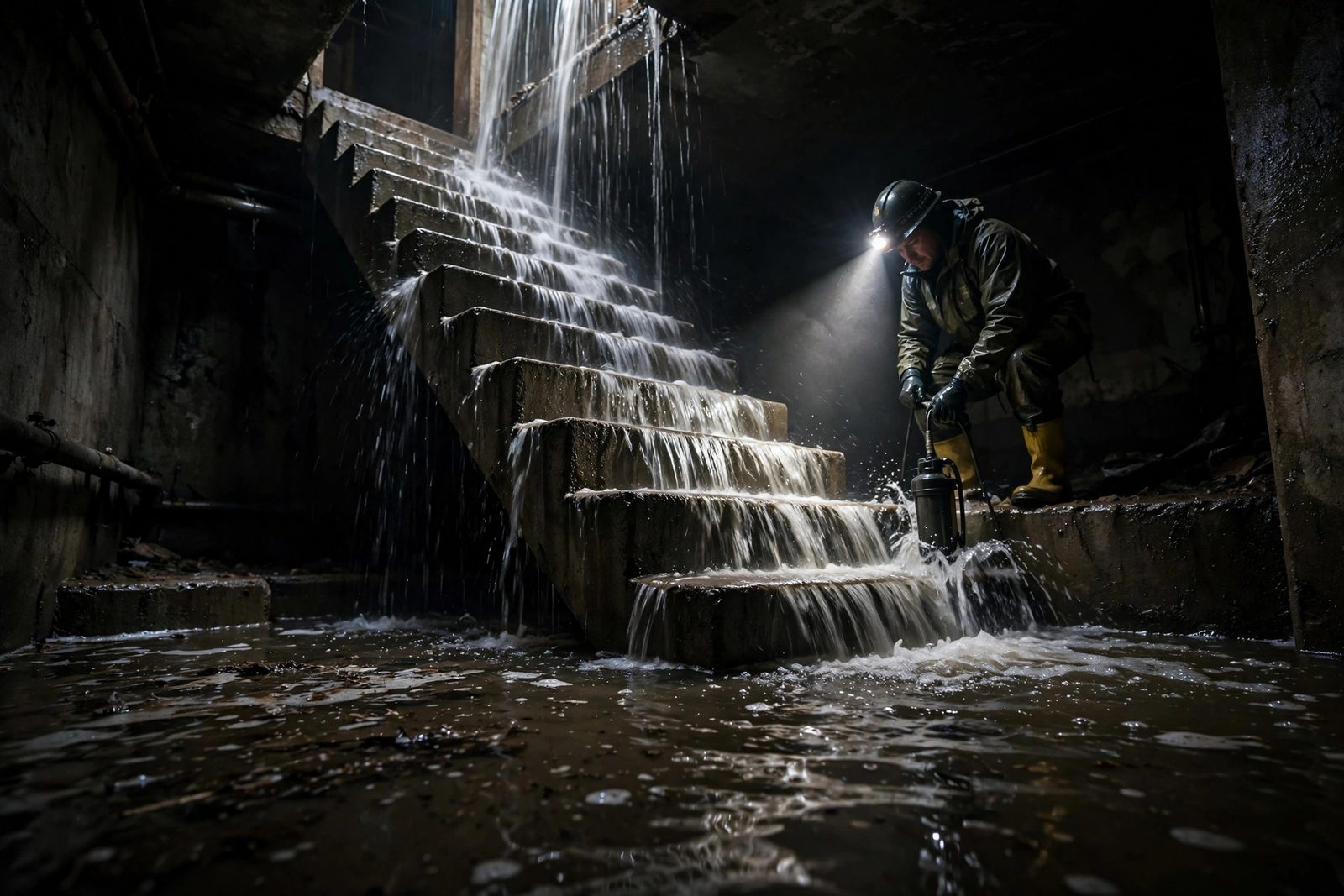
More Than Water Removal
Water is only the first problem. Here's what we actually fix when we walk through your door.
Structural Damage
Standing water weakens framing, subfloors, and foundations. Fast extraction stops a small leak from becoming a structural repair.
Mold Growth
Mold can colonize damp drywall within 48 hours. We dry to verified moisture standards and treat surfaces to prevent regrowth.
Health Risks
Sewage backups and long-standing water carry bacteria and contaminants. We clean and sanitize until the space is safe again.
Lingering Odors
A musty smell means moisture is still hiding somewhere. We find the source, dry it completely, and deodorize — never just mask it.
Ruined Floors & Walls
Buckled hardwood, swollen drywall, peeling paint. We remove what can't be saved and rebuild what matters, start to finish.
Insurance Stress
Claims stall on thin documentation. We photograph everything, log moisture readings daily, and deliver adjuster-ready reports.
05Hubbard's Two Housing Stocks, Two Flood Patterns
Hubbard's ~7,600 residents live in two distinct built environments, and they flood differently:
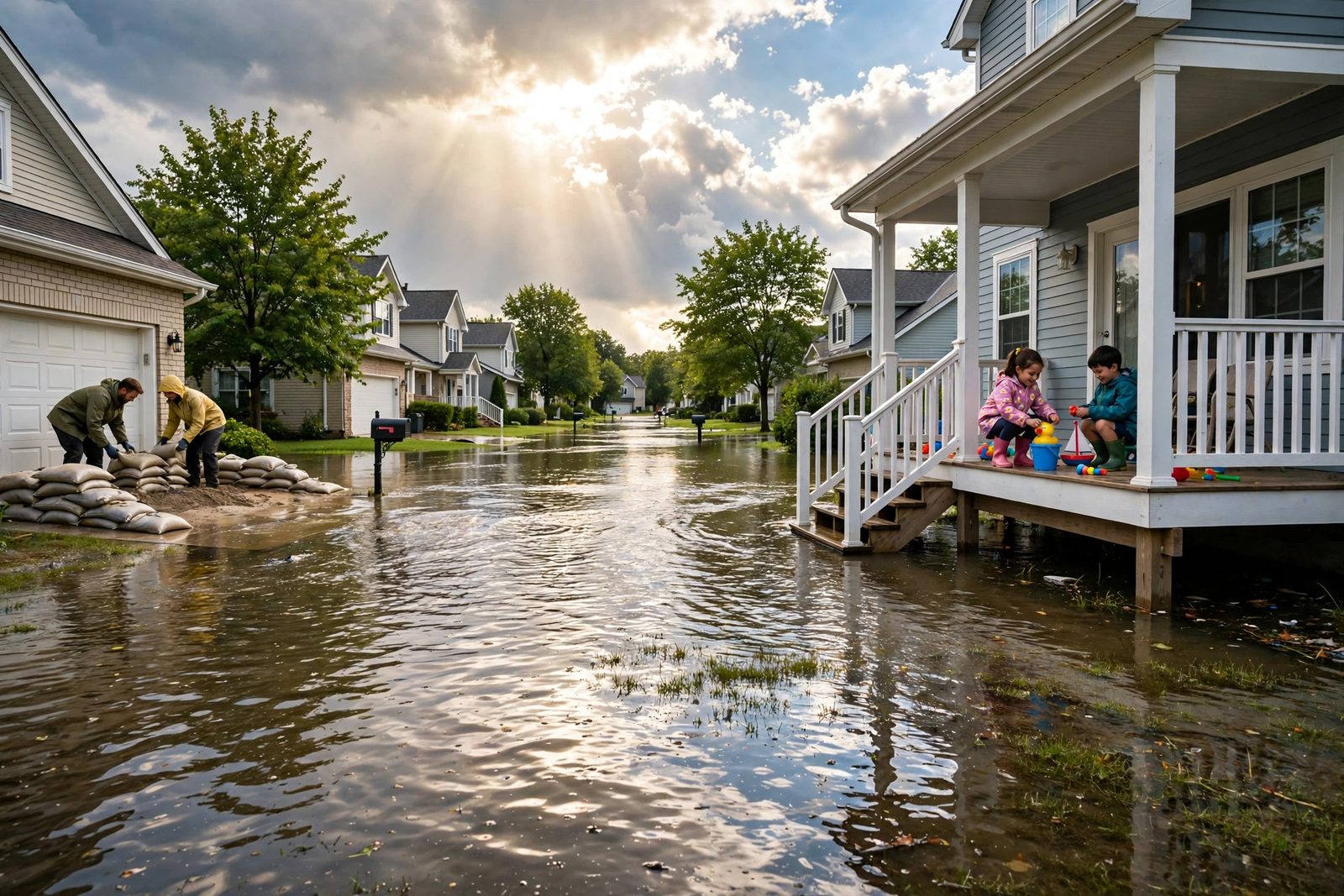
- Early-1900s worker housing near downtown — industrial-legacy homes with older basements, aging sewer laterals, and decades of foundation settling. The pattern here is seepage through old walls and sewer backup during heavy rain, when the system surcharges.
- Newer subdivisions and the I-80 commercial corridor — slab and ranch homes that depend on sump pumps and subdivision drainage. The pattern here is pump failure (especially during storm power outages) and grading that sends a neighbor's runoff into your foundation.
Cross-border storm exposure adds a wrinkle: intense cells moving off Pennsylvania into the upper Mahoning Valley can hit Hubbard with little warning, and winter freeze-thaw cycles burst older pipes. Whatever the pattern at your address, the response is the same: call (614) 956-3233 — rapid extraction, moisture mapping, verified drying, and documented rebuild.
06CTA Blocks
Hubbard Basement Flooding? The Creeks Don't Wait — Neither Should You. Little Yankee Creek and Mud Run have flooded Hubbard before, and small watersheds flash with almost no warning. Integrity Water Damage Restoration Ohio responds 24/7 with emergency extraction, verified drying, and mold prevention. Call (614) 956-3233.

Free Moisture Inspection — Hubbard & Eastern Trumbull County Old water damage? Musty smell? Recurring seepage? We'll measure moisture behind walls and under floors and give you an honest assessment — free. Call (614) 956-3233.
Our Restoration Process
A disciplined, four-step method — no guesswork, no shortcuts, no surprises.
Rapid Assessment
We inspect on arrival, map hidden moisture with meters and thermal imaging, and lay out a clear plan before any work starts.
Water Extraction
Truck-mounted and portable extractors pull standing water fast — the single biggest factor in limiting total damage.
Drying & Dehumidification
Commercial air movers and dehumidifiers run under daily monitoring until every material reaches verified dry standard.
Cleaning & Restoration
Sanitizing, odor removal, drywall, flooring, and paint — your property restored by one accountable crew.
“Every hour water sits, the damage — and the bill — grows.”
Call (614) 956-3233 — We Answer 24/7Why Ohio Homeowners Call Us First
- 24/7 live dispatch — a real person answers, day or night, holidays included
- 60-minute emergency response goal across our Ohio service area
- Upfront, honest pricing explained before work begins
- Insurance-ready documentation — photos, moisture logs, line-item reports
- Mold prevention built in — antimicrobial treatment on every drying job
- One accountable crew from emergency extraction to final repairs
Water Damage Can't Wait — Neither Do We
Our Ohio crews are on call 24/7 for emergency water extraction and drying.
Call (614) 956-3233 Now?Frequently Asked Questions — Water Damage in Hubbard
They protect the Mahoning River corridor — and they've prevented over $915 million in damages since 1944. But they don't regulate Little Yankee Creek or Mud Run, the small streams that actually flood Hubbard neighborhoods. Your flood risk is tributary and storm-sewer driven, not big-river driven.
The documented corridors are Little Yankee Creek and Mud Run (USGS, September 2004). Low-lying areas near the Pennsylvania line can also see backwater effects from the Shenango River system. If you're unsure about your property, check your elevation relative to the nearest creek — and call (614) 956-3233 for a flood-risk assessment.
Yes. Moisture trapped in walls and subfloors can persist for years, feeding mold and rot. Our moisture-mapping inspection finds hidden damage and we give you an honest assessment of what needs remediation. Call (614) 956-3233.
Not necessarily failing — surcharging. When stormwater overwhelms the system, water backs up through the lowest connections. A backwater valve on your lateral prevents sewage from flowing back into your home; we can advise on installation during your restoration visit. If sewage is in your basement now, stay out and call (614) 956-3233 immediately.
Hubbard sits on the Ohio–Pennsylvania line, and intense storm cells moving off Pennsylvania into the upper Mahoning Valley hit the city's small watersheds with little warning. Small creeks flash in an hour — faster than any warning reaches most residents.
Yes — Hubbard's I-80 interchange commercial corridor, downtown, and residential neighborhoods, plus Brookfield, Masury, and surrounding Trumbull County. Call (614) 956-3233 24/7.
Also Serving Nearby Communities
Fast response across the region — pick your town for local flood risks and what to do first.
How Was Your Experience?
If our crew helped you through a water emergency, your review helps Ohio neighbors choose with confidence.