In Clyde, water doesn't come over the banks — it rises through limestone from below. Integrity Water Damage Restoration Ohio offers 24/7 groundwater extraction. Call (614) 956-3233.
Water Emergency Right Now?
Do these five things first — then let us take it from there.
- Stay safe first. Don't walk through standing water if the power may be on — and never touch submerged outlets, panels, or appliances.
- Stop the source if you can. Shut the main water valve for a burst pipe or appliance leak. For storm flooding, focus on safety, not the water.
- Call (614) 956-3233 now. Our dispatchers answer 24/7 and can talk you through the next steps while a crew rolls.
- Move what matters. Lift rugs, electronics, and furniture legs out of the water if it's safe to do so — every inch helps.
- Don't wait on drying. Mold can start within 24–48 hours. Fast professional drying is the difference between a cleanup and a rebuild.
01In Clyde, Water Comes Up — Not Over
Clyde has no major river running through it. The Sandusky River watershed surrounds the area, but inside town the only surface drainage is small streams and agricultural ditches. If Clyde's basements flooded by river standards, the city would barely register.
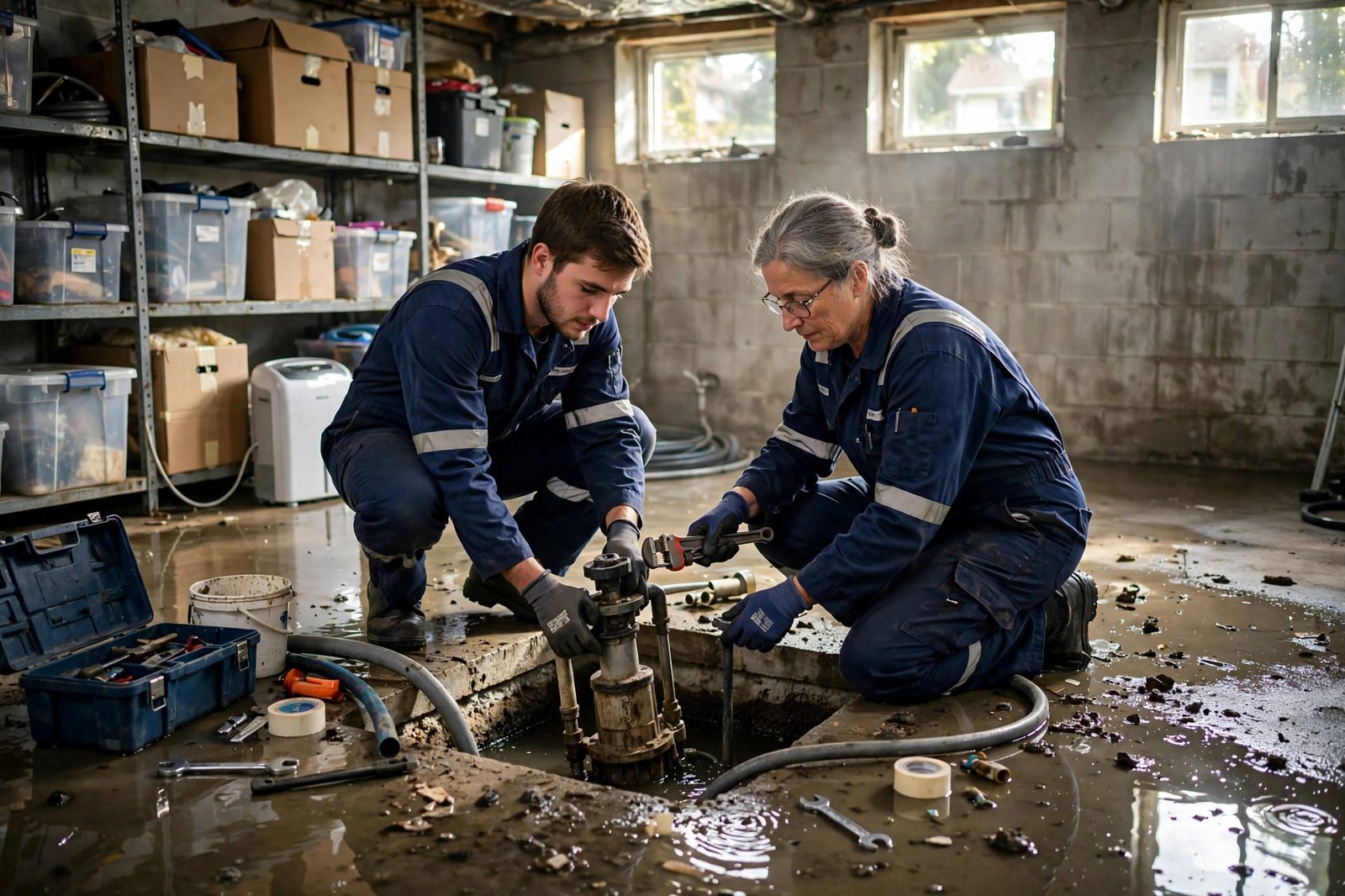
They flood by groundwater standards — and the reason is buried under your feet. Clyde sits in Ohio's karst belt. ODNR's karst study of the Bellevue, Clyde, and Castalia quadrangles (OFR 2013-1) documents the dissolution of buried limestone and dolomite beneath this area — fractured, honeycombed rock that lets groundwater bypass soil layers and rise rapidly, even far from any stream. Thin glacial cover over fractured limestone means water can come up through the floor of a Clyde basement on a rainy week, with no creek involved at all.
Integrity Water Damage Restoration Ohio specializes in Clyde's signature loss: groundwater intrusion, hydrostatic pressure damage, and basement flooding in older homes — 24/7 emergency extraction, staged pump-down, verified drying, and foundation-entry diagnosis. Call (614) 956-3233.
02Bellevue, Spring 2008: A Five-Week Lesson in What Clyde's Geology Can Do
Clyde's neighbor Bellevue — just west, in the same quadrangle study area — gave the region its most vivid warning. In spring 2008, karst flooding produced a disaster with no storm attached to it: groundwater rose through cracks in the limestone for five weeks, buckling basement floors, cracking foundations, closing roads, and costing roughly $500,000 (Claims Journal, May 2008).
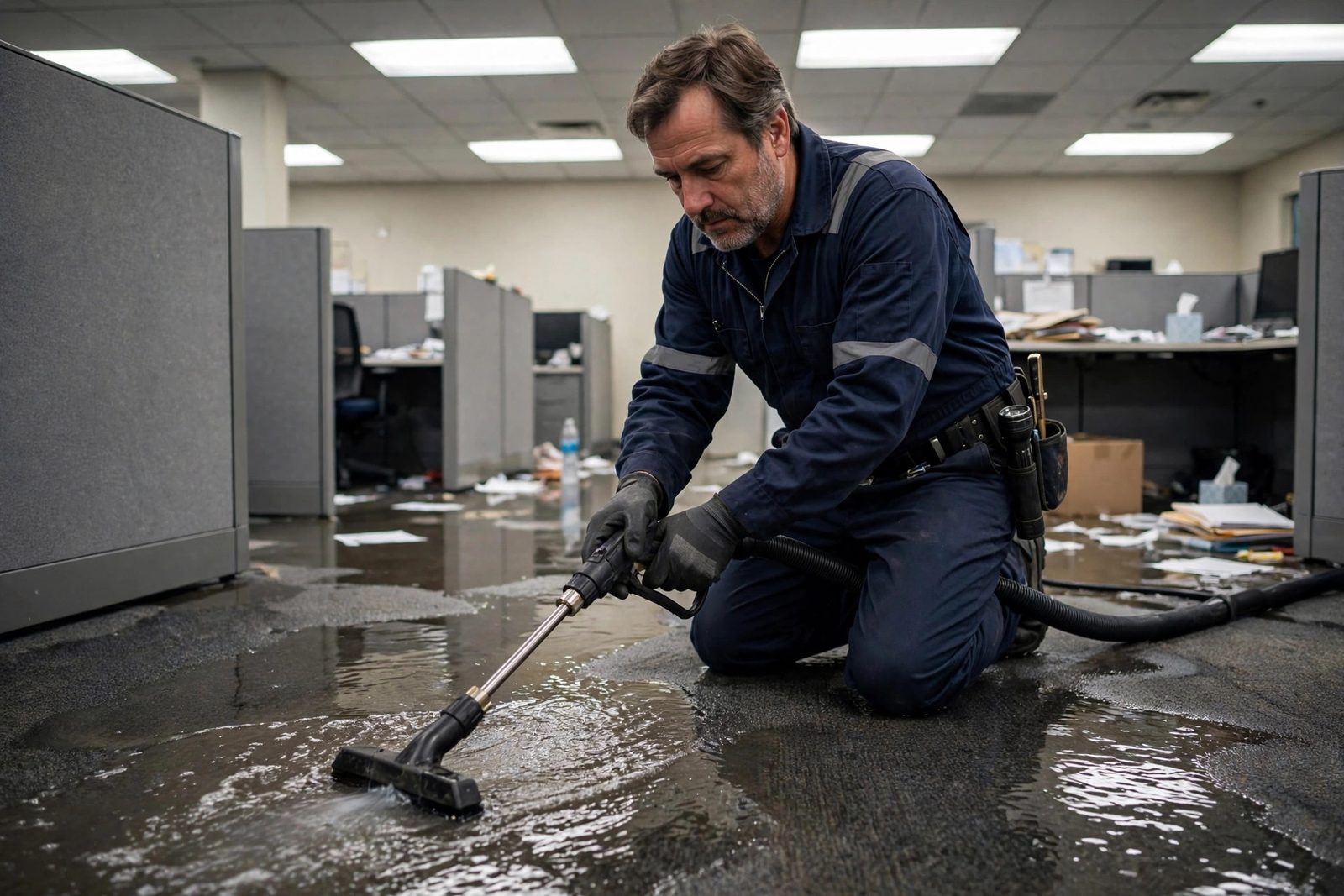
Five weeks. Not a flash flood — a slow, relentless upwelling that no sandbag could stop and no sump pump sized for ordinary seepage could outrun. Clyde shares Bellevue's geology and the same ODNR quadrangle study. When the water table rises after sustained wet weather, the limestone under Clyde behaves the same way — which means Clyde's real preparedness question isn't "is the creek rising?" but "is the pump keeping up, and is the floor holding?"
If your basement floor is heaving, cracked, or weeping water through the slab, call (614) 956-3233. This is the signature failure mode of karst-country basements, and it needs professional diagnosis — pumping a pressurized basement wrong can make it worse (see below).
03The Hidden Risk: Hydrostatic Pressure and Floor-Slab Buckling
When groundwater rises against a basement, it doesn't just leak — it presses. Hydrostatic pressure builds against the foundation walls and, critically, under the floor slab. The damage pattern in karst flooding is distinctive:
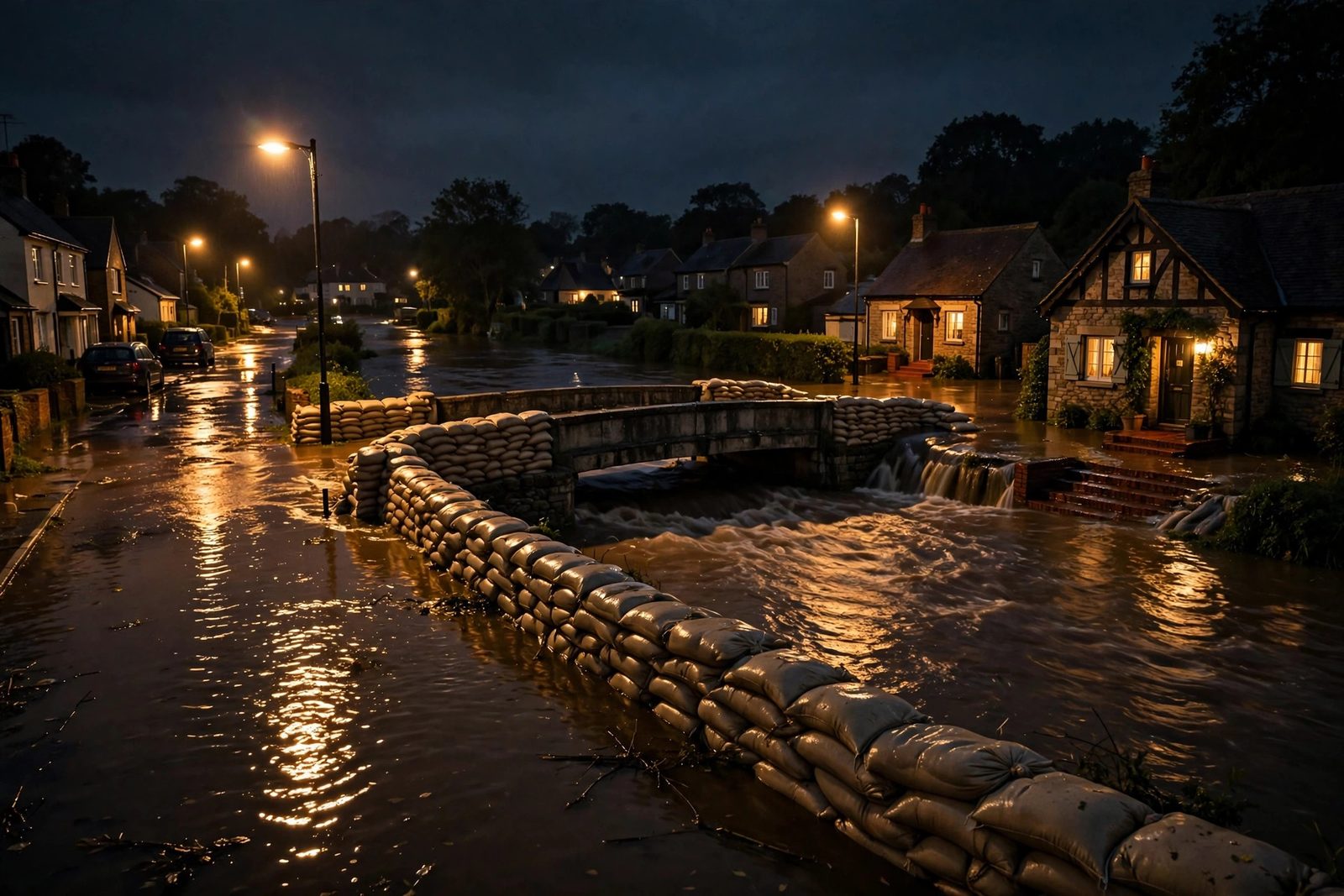
- Water weeping up through the slab and floor-wall joints, even when no surface water is visible outside.
- Floor-slab heaving and buckling — exactly what Bellevue homes experienced in 2008.
- Cracked foundations and walls as pressure finds weak points.
- Recurring seepage in the same season each year, tied to the water table rather than any single storm.
One critical safety note: when a basement is under hydrostatic pressure, pumping it down too fast can collapse the floor. A sudden drop in interior water level while pressure remains underneath can lift or buckle the slab — professionals stage the pump-down and monitor it. If your Clyde basement is taking groundwater, don't just drop a pump in and walk away. Call (614) 956-3233 for staged, monitored extraction.
04Storms Still Flood Clyde's Streets and Low Spots
Karst is Clyde's signature risk, but surface water has its own verified record:
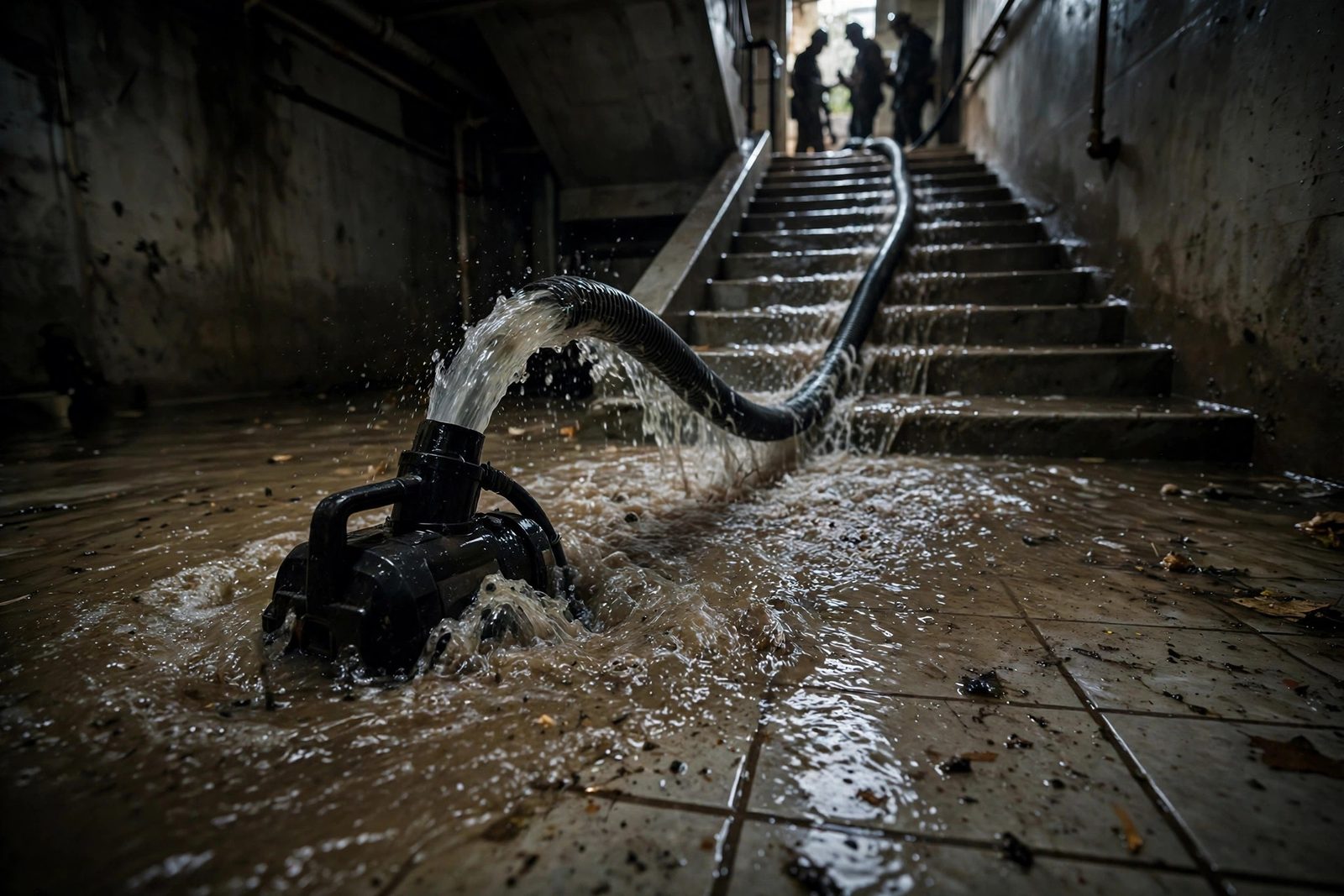
- June 9–10, 2026: 4.32 inches of rain fell on Sandusky County; fields flooded on SR 101 east of Clyde, and Ohio 101 was closed "from South CR 268 to Clyde" for flooding (Fremont News-Messenger, June 11, 2026).
- June 27, 2015: 3.43 inches of rain recorded at Clyde during the regional heavy-rain event (NWS Cleveland).
- June 21–22, 2006: Sandusky County was one of six counties declared a federal disaster area after the flash-flood event (7–9 inches of rain in parts of the region; USGS SIR 2007-5161).
- April 1, 2026: Clyde was named in an NWS flood warning for locations experiencing flooding.
Clyde's older small-city housing stock — mostly basements, mostly older — is the most vulnerable configuration for both threats: groundwater intrusion from below and storm-driven flooding at low spots. Sump pumps are essential here, and they need to be sized for the real risk: not just rain, but the rising water table that follows it.
More Than Water Removal
Water is only the first problem. Here's what we actually fix when we walk through your door.
Structural Damage
Standing water weakens framing, subfloors, and foundations. Fast extraction stops a small leak from becoming a structural repair.
Mold Growth
Mold can colonize damp drywall within 48 hours. We dry to verified moisture standards and treat surfaces to prevent regrowth.
Health Risks
Sewage backups and long-standing water carry bacteria and contaminants. We clean and sanitize until the space is safe again.
Lingering Odors
A musty smell means moisture is still hiding somewhere. We find the source, dry it completely, and deodorize — never just mask it.
Ruined Floors & Walls
Buckled hardwood, swollen drywall, peeling paint. We remove what can't be saved and rebuild what matters, start to finish.
Insurance Stress
Claims stall on thin documentation. We photograph everything, log moisture readings daily, and deliver adjuster-ready reports.
05Your Clyde Basement's Defense System
- Primary sump pump, sized for volume — and tested before spring, not during the first flood.
- Battery or water-powered backup. The storms that bring the water also bring the outages; a dead pump during a rising water table is the classic Clyde loss scenario.
- Interior drainage (French drain) to a sump pit for chronic seepage basements — intercepting water under the slab before it finds the floor.
- Foundation crack repair and exterior grading — move surface water away so it doesn't recharge the pressure under your floor.

We diagnose entry paths during every restoration visit — slab, wall joints, window wells, or lateral — so the fix targets the actual failure. Call (614) 956-3233.
06CTA Blocks
Clyde Basement Taking Water from Below? Call Now — 24/7. Groundwater intrusion, hydrostatic pressure, buckling floors, sump pump failures — Clyde's water threat comes from underneath, and Integrity Water Damage Restoration Ohio is built for exactly that. 24/7 emergency extraction and verified drying across Clyde and Sandusky County. Call (614) 956-3233.
Free Moisture Inspection — Clyde & Sandusky County Floor weeping water? Cracks spreading? Basement that floods every wet spring? We'll measure moisture, identify the entry path, and give you an honest assessment — free. Serving Clyde, Fremont, Bellevue, and Green Springs. Call (614) 956-3233.
Our Restoration Process
A disciplined, four-step method — no guesswork, no shortcuts, no surprises.
Rapid Assessment
We inspect on arrival, map hidden moisture with meters and thermal imaging, and lay out a clear plan before any work starts.
Water Extraction
Truck-mounted and portable extractors pull standing water fast — the single biggest factor in limiting total damage.
Drying & Dehumidification
Commercial air movers and dehumidifiers run under daily monitoring until every material reaches verified dry standard.
Cleaning & Restoration
Sanitizing, odor removal, drywall, flooring, and paint — your property restored by one accountable crew.
“Every hour water sits, the damage — and the bill — grows.”
Call (614) 956-3233 — We Answer 24/7Why Ohio Homeowners Call Us First
- 24/7 live dispatch — a real person answers, day or night, holidays included
- 60-minute emergency response goal across our Ohio service area
- Upfront, honest pricing explained before work begins
- Insurance-ready documentation — photos, moisture logs, line-item reports
- Mold prevention built in — antimicrobial treatment on every drying job
- One accountable crew from emergency extraction to final repairs
Water Damage Can't Wait — Neither Do We
Our Ohio crews are on call 24/7 for emergency water extraction and drying.
Call (614) 956-3233 Now?Frequently Asked Questions — Water Damage in Clyde
Yes — and it's geology, not plumbing. Clyde sits on fractured limestone (karst) that lets groundwater rise through the floor and floor-wall joints, far from any stream. Thin glacial cover over that rock makes basement intrusion the signature local risk. We specialize in it. Call (614) 956-3233.
In spring 2008, karst groundwater flooding in Bellevue — just west of Clyde, in the same ODNR quadrangle study area — lasted five weeks, buckled basement floors, cracked foundations, closed roads, and cost about $500,000. Clyde shares that geology, so the same sustained water-table rise is the city's worst-case basement scenario.
That's hydrostatic pressure under the slab — and it's urgent but delicate: pumping down too fast can collapse the floor. Don't just drop a pump in. Call (614) 956-3233 for staged, monitored extraction and a foundation-entry diagnosis.
Because Clyde's threat is a rising water table after sustained rain — a scenario that unfolds over days, exactly when storm-related outages are most likely. A primary pump with no backup fails precisely when it's needed most.
Standard homeowners policies typically exclude flooding (including groundwater intrusion); you generally need a separate flood policy. Document everything with photos and call (614) 956-3233 — our moisture logs and source identification support whatever coverage you carry.
Yes — Clyde, Fremont, Bellevue, Green Springs, and surrounding Sandusky County communities. Call (614) 956-3233 24/7.
Also Serving Nearby Communities
Fast response across the region — pick your town for local flood risks and what to do first.
How Was Your Experience?
If our crew helped you through a water emergency, your review helps Ohio neighbors choose with confidence.